




Description
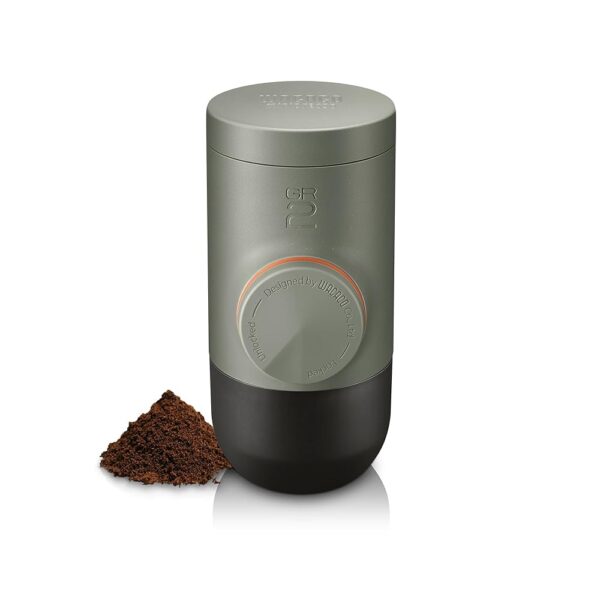
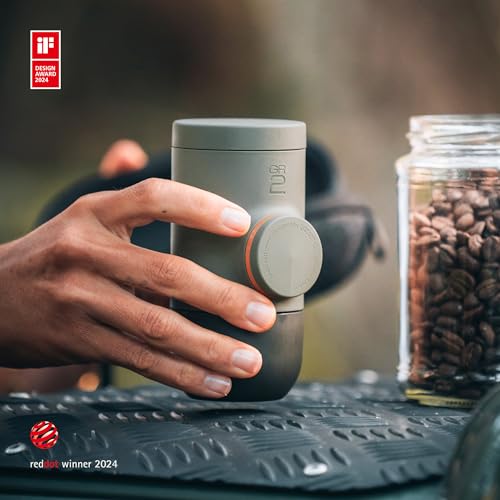
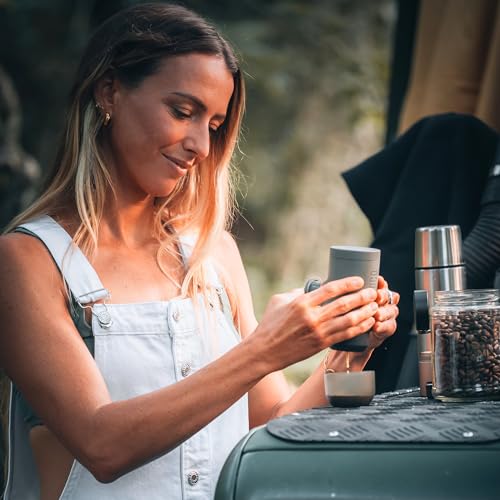
The WACACO Minipresso GR2 is a hand operated espresso maker for ground coffee, with no electricity, no boiler and no pump beyond your own thumb. It measures 2.8 inches deep, 2.36 inches wide and 4.92 inches high, weighs 12.8 ounces, and ships with a built in espresso cup, a scoop, a funnel, a drip tray, a brush, a carrying pouch and an instruction book. The basket takes an adjustable dose of 8 to 12 grams and the water chamber holds 80ml.
This is a travel device and it should be judged as one. Compared with the electric machines in our espresso machines category it makes a smaller, cooler drink and takes more effort per cup. Compared with the alternative when travelling, which is instant coffee or nothing, it produces real espresso from real grounds anywhere you can boil water. That is the correct comparison and by that standard it does what it claims.
How the Hand Pump Works
The Minipresso is a two chamber device. You fill one end with hot water, pack ground coffee into the adjustable basket at the other, screw the two together, then unlock a piston and pump it repeatedly with your thumb. Each stroke forces a small volume of water through the puck. The listing quotes 18 bar, which is the peak pressure the mechanism can generate rather than a sustained figure, and it is realistic for a hand pump of this design because a small piston area concentrates modest hand force into high pressure.
What that means in practice is that pressure is under your control and is not constant. A pump stroke produces a pressure spike; between strokes it falls away. That gives a different extraction profile from an electric machine holding steady pressure, and it is why the drink from a hand pump has a distinctive character: intense, sometimes uneven, and highly responsive to how consistently you pump. Grind fineness matters more here than on a machine with a pressurised basket, because there is nothing masking a coarse or uneven grind.
The 8 to 12 Gram Adjustable Basket
An adjustable basket is the specification that separates the GR2 from the older Minipresso GR it replaces. Being able to run 8 grams for a lighter cup or 12 grams for a stronger one, without changing hardware, is genuine flexibility on a device this small. Twelve grams into 60ml of water is a reasonable ratio and will produce something close to a proper double in strength if not in volume.
The basket is a metal filter and it is reusable rather than a pod system, which is the whole point: you can take whatever coffee you like, ground however you like. Anyone travelling with a hand grinder can grind fresh on site, and the same loose grounds work in a stovetop pot from our stovetop espresso and moka pot range if you have a hob rather than a bag. Anyone travelling with pre ground coffee should buy it ground fine for espresso, since the machine will not compensate. The included scoop and funnel exist because loading a basket this small without spilling is otherwise awkward.
The 80ml Tank and Water Temperature
The water chamber holds 80ml and the machine produces up to 60ml of coffee, which is one drink. That is the hard limit of the format: you refill and repack for a second cup, and there is no way around it. For one person on a trip that is fine. For making coffee for two people it is a slow process.
Temperature is the honest weakness of every unheated hand pump. You pour hot water into a cold metal chamber, screw on a cold portafilter and pump through cold coffee, and each of those surfaces takes heat out of the water. The resulting drink is noticeably cooler than one from an electric machine unless you preheat the device by running hot water through it first and discarding it. That step takes thirty seconds and makes a substantial difference. Nothing on the listing mentions it, and it is the single most useful thing to know before the first use.
Build, Materials and Cleaning
Earlier listing copy describes a double wall structure with an outer shell partly made from wheat composed polymers. The double wall is functional rather than cosmetic: it keeps the outside of the device cool enough to hold while hot water sits inside it, which matters on something you grip and pump. The wheat polymer content is an environmental claim that the listing does not quantify, so treat the proportion as unstated.
Cleaning is straightforward and it is one of the format’s advantages. The device unscrews into its component parts, the basket knocks out, and everything rinses under a tap. The supplied brush handles the filter mesh. There is no boiler to descale, no pump to seize, no electronics to fail and no water sitting in a tank between uses, which is why devices of this type survive years of travel abuse better than any electric machine would.
What the Specifications Do Not Settle
The human interface input field reads Buttons. There are no buttons on this device; it has a piston and a locking collar. That field is a template artefact rather than a product characteristic. The special feature field reads simply lightweight, which is accurate and uninformative.
Substantively, the listing does not state whether the device includes milk frothing, and it does not: there is no steam, no wand and no mechanism for it, so cappuccinos and lattes are only possible if you froth milk separately. It does not state the recommended grind size, the number of pump strokes a typical shot requires, the water temperature to start with, the material of the filter basket, whether spare seals are available, or the warranty term. It also does not state the pressure the mechanism sustains rather than peaks at, which is the figure that would actually describe the extraction. And it does not say that preheating is effectively required, which is the omission most likely to disappoint a first time user.
Who It Suits
This suits a traveller, a camper, an office worker with no kitchen or anyone who wants real espresso somewhere a machine cannot go. It is small enough to live in a bag, robust enough to survive being there, and it uses ordinary ground coffee rather than a proprietary capsule, so it costs nothing beyond the coffee itself. For a single drinker it works well. The Wacaco Minipresso GR is the earlier version of the same tool.
It suits you poorly as a daily home machine, because one drink per fill and a manual pumping routine become tiresome quickly, and because a countertop machine will produce a hotter and more consistent result with less effort. It suits you poorly if you drink milk based coffee, since there is no frothing capability at all. And if the appeal is portability specifically, the larger WACACO Nanopresso holds more water and generates higher pressure for a modest increase in size, while the Nanopresso NS adapter adds capsule compatibility for anyone who would rather not carry loose grounds. The standard WACACO Nanopresso is the version to compare on capacity and pressure.