


Description
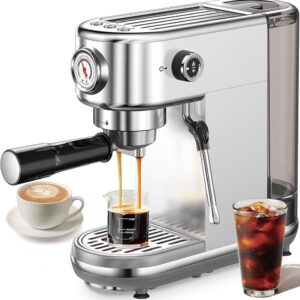
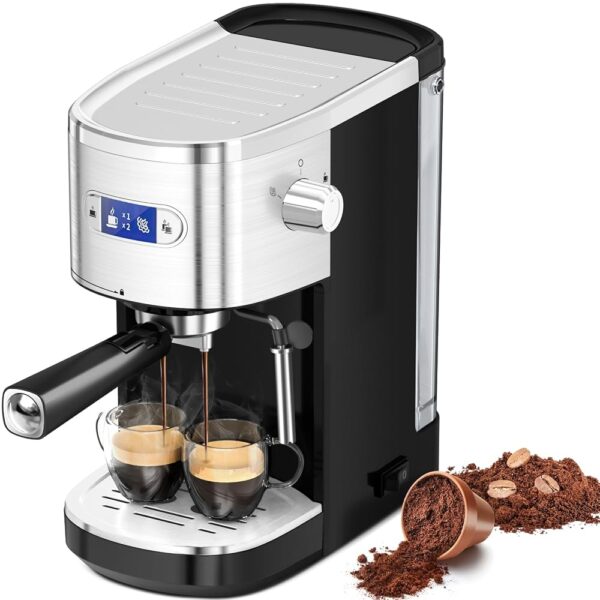
The ZAFRO CM8054 is a semi automatic pump espresso machine with a feature uncommon at its price: a built in pressure gauge on the front panel. ZAFRO specifies a 20 bar Italian pump, a manual steam wand, a 45 ounce removable water tank, single and double filter baskets and what the included components list calls a capsule portafilter. It measures 14.17 inches deep, 8.9 inches wide and 13.6 inches tall at 12.27 pounds, and the operation mode field correctly reads semi automatic.
A pressure gauge is the difference between a machine you can learn on and one you can only guess at. It turns the extraction from a sealed process into something with visible feedback, which is exactly what a beginner needs when the only other information available is how the finished shot tastes.
The Pressure Gauge and How to Read It
ZAFRO describes the gauge as showing the exact pressure so adjustments can be made to taste. In practice its value is diagnostic. A needle that pins immediately at the top of the scale means the grind is too fine, the dose too large or the tamp too heavy. A needle that barely lifts means the opposite. The productive zone is the middle of the dial, which corresponds to roughly 9 bar at the puck.
There is one important caveat. On machines using pressurised baskets, the gauge partly reads the restrictor rather than the coffee, which mutes the signal considerably. ZAFRO does not state whether the supplied single and double baskets are pressurised. If they are, swapping to a non pressurised basket is what makes the gauge genuinely informative, and it is a cheap change. The Gevi ECMG0 is the closest comparison on this site with the same feature at a similar price.
The Capsule Portafilter
The included components list contains an entry reading capsule portafilter alongside the single and double filter baskets. That implies the machine accepts pre packaged coffee as well as ground, but the listing never explains which format.
The distinction matters. An ESE pod carrier takes 44 mm paper wrapped pods, an open industry standard made by many roasters. A capsule adapter for Nespresso style capsules is a different thing entirely, tied to one system. ZAFRO does not say which this is, and buying on the assumption of either would be a gamble. Anyone for whom pod compatibility is the deciding factor should confirm the format with the seller before ordering rather than after.
Brewing, Pressure and Grind
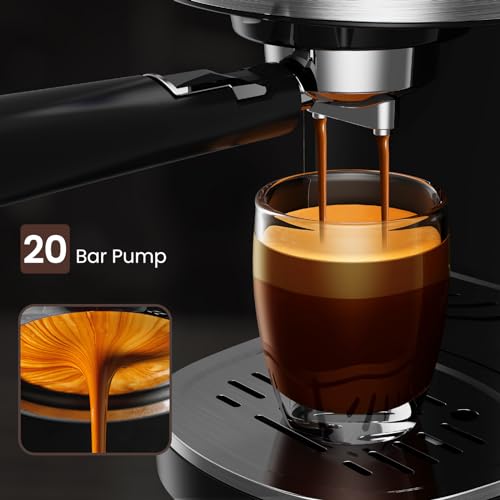
The 20 bar figure is the pump maximum rather than the pressure at the coffee, which settles near 9 bar during a real extraction. No wattage, no brew temperature and no boiler or thermoblock designation appears anywhere in the data, which is unusual even for this price band, so how the machine heats water is simply unknown from the listing.
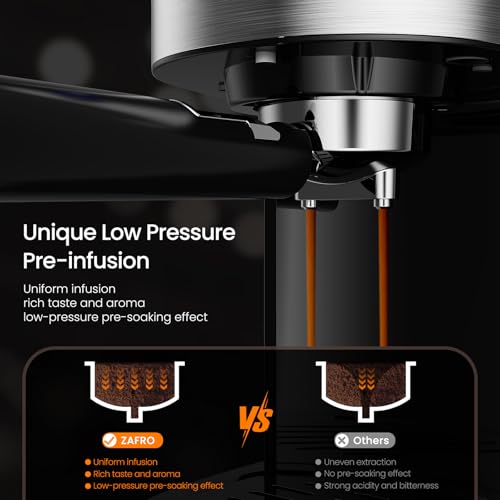
What ZAFRO does supply is a coffee spoon and tamper combination alongside the baskets. As on every machine of this type, shot quality is decided largely by the grinder you pair with it. Pressurised baskets flatten the difference between fresh and stale coffee; non pressurised baskets do not. With a gauge on the front panel this machine is better equipped than most to show you the difference, provided the basket lets it.
Steam Wand and Milk
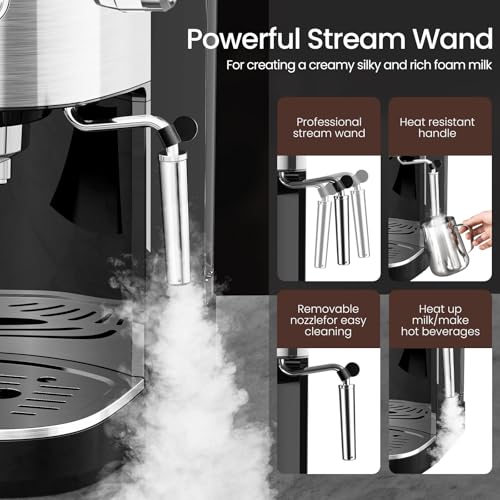
The steam wand is manual, and ZAFRO describes it as producing microfoam suitable for latte art. As on any single heater machine, brewing and steaming are sequential rather than simultaneous, and no steam pressure, tip design or recovery time is published.
Published owner feedback raises a specific ergonomic point: the wand is short, which makes milk splash out of a jug more easily and restricts how deeply the tip can be submerged. A shorter, wider pitcher works better here than a tall narrow one, and keeping the tip just under the surface during the aeration phase rather than plunging it deep is the technique that compensates. The wand should be purged and wiped after every use without exception, since milk residue baked onto a tip is the most common failure on machines in this class.
Tank, Cup Warmer and Build
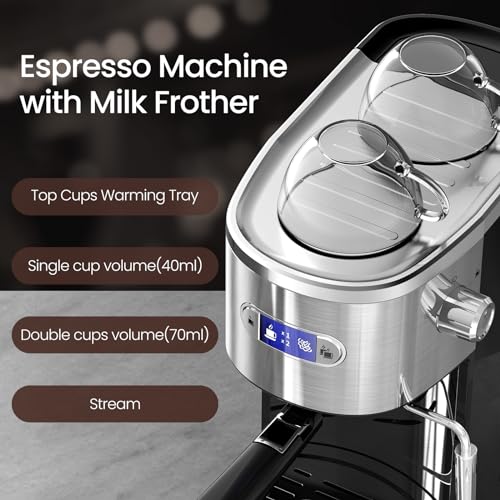
The 45 ounce removable tank is generous and reduces refilling to an occasional task. A cup warming area occupies the top panel, heated passively by the boiler beneath rather than by a dedicated element, so it works but takes time from cold. Preheating a cup makes a measurable difference to the temperature of a 30 ml shot by the time it reaches the drinker, so the warming plate is worth using rather than ignoring.
Owner feedback identifies two irritations. The portafilter locking mechanism takes noticeable effort, which is common when seals are new and eases with use. And the water tank has no lid, so dust settles in it if the machine sits unused; covering it or emptying it between long gaps is the workaround. At 12.27 pounds the machine is heavy enough not to slide when the portafilter is locked in, which is more than can be said for several rivals.
Running Costs and What You Add Later
Beyond coffee and descaler there is nothing this machine requires. The baskets are reusable, there is no water cartridge and no proprietary consumable, so the running cost is whatever you spend on beans. Over two years that difference against a capsule machine is substantial, and it is the strongest financial argument for a portafilter machine at any price.
What most owners add is a burr grinder, which on a machine with a pressure gauge pays back more than usual because the gauge shows you what the grind change did. A non pressurised basket is the second cheap addition, and a proper weighted tamper the third; the supplied spoon and tamper combination is light and small, and consistency improves noticeably with a heavier one. A milk thermometer is worth having if you steam regularly, since judging milk temperature by hand takes months to learn.
What the Specifications Do Not Settle and Who It Suits
Missing entirely are the wattage, the voltage, the brew temperature, the heat up time, the portafilter diameter, the basket dose in grams, whether the baskets are pressurised, the capsule format and the warranty term. The special feature field is filled with keyword phrases rather than specifications, and the model name field reads simply Coffee Machine. ZAFRO states that customer queries are answered within 12 hours, which is a seller commitment rather than a warranty term; we could not verify it and have not counted it as a specification. The machine launched in February 2024 with a modest published review count, so long term owner history is thin. The Spacekey CM5080 leaves the same fields blank.
The CM8054 suits a learner who wants visible feedback on extraction at a low price, and who has the counter space for a 14 inch deep machine. A pressure gauge, a 45 ounce tank and a cup warmer make it better equipped than most rivals in the same bracket, and pairing it with a burr grinder and a non pressurised basket is what unlocks the gauge. It is the wrong machine for anyone making several milk drinks in a row given the short wand, and for anyone who needs the pod format confirmed before buying. Buyers wanting a proven record should compare the Wirsh Home Barista or the CASABREWS CM5418, and anyone weighing the field should read across the espresso machine category. The QJA EM625 is the closest rival with a touch panel and a larger tank.