


Description
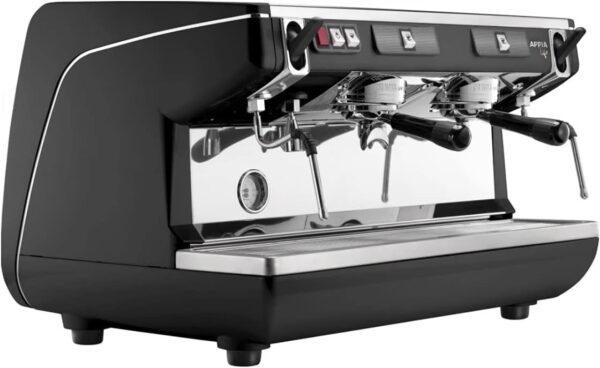
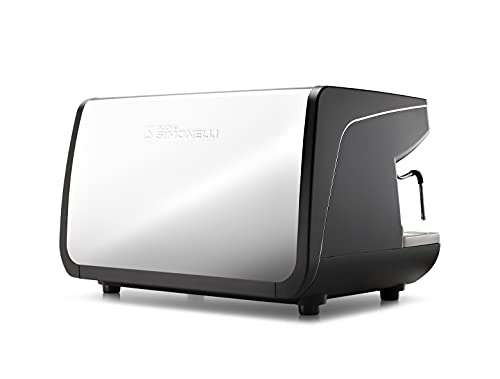
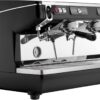
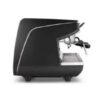
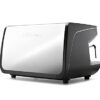
The Nuova Simonelli Appia is a two group commercial espresso machine built in Italy, weighing 250 pounds, with a semi-automatic operation mode, a portafilter coffee input and two steam wands. The listing records a metallic black finish, a manufacture year of 2020 and a stated European spare part availability duration of five years. It has been listed since August 2013.
Two hundred and fifty pounds settles the question of what this is. This is cafe equipment, not a large home machine, and it is specified for continuous service rather than for what a single shot tastes like. Nothing in our espresso machines category for home use is comparable, and the honest comparison is against the other machines in our commercial espresso machines and coffee makers selection.
What Two Groups and Semi-Automatic Mean Here
A group is the head where a portafilter locks in and a shot is pulled. Two groups means two independent brewing points, so two baristas, or one barista with two portafilters, can work in parallel. That is a throughput specification rather than a quality one, and it roughly halves the time between orders in service.
Semi-automatic on a commercial machine means volumetric dosing: each keypad position is programmed to a volume measured by a flow meter, so a single, a double and a long black are each one button press and identical between staff. It does not mean a bean to cup machine. The Appia has no grinder at all; a commercial installation uses a separate commercial grinder alongside, and choosing and dialling in that grinder is a substantial part of the setup and the cost.
The Soft Infusion System
The listing highlights a soft infusion system, which is Nuova Simonelli's pre infusion design. Rather than hitting the puck with full pump pressure immediately, water is introduced gently first so the bed saturates evenly before pressure builds. That reduces channelling, which is the most common cause of a sour, uneven shot.
On a commercial machine this matters more than on a domestic one, because the machine has to produce a consistent result from a puck prepared quickly under pressure by whoever is on shift. A pre infusion stage forgives small variations in tamping and distribution that would otherwise show in the cup. The listing also highlights ergonomics and reduced barista fatigue, which refers to the group height, the wand positions and the keypad layout rather than to anything about the coffee, and which matters over an eight hour shift in a way it never does at home.
Steam Wands and Milk
A two group commercial machine carries two steam wands fed from a large steam boiler, which is why the listing describes velvety milk suitable for latte art. Steam supply on equipment of this class is effectively unlimited for domestic purposes: there is no recovery wait, no purging routine and no compromise between brewing and steaming, because the boiler is sized to sustain both.
The included components field reads Milk Frother, which is a domestic term that does not describe what is fitted. A commercial machine has steam wands, not a frother, and the distinction matters because a frother implies automation that is not present here. Everything about the milk on this machine is manual and depends on the person holding the pitcher.
Installation and Running Requirements
The listing says nothing about installation, and that omission is the most important gap on the page. A machine of this class is plumbed to a mains water supply through filtration or softening and drains to waste; it is not filled from a tank in normal use. It requires a dedicated electrical supply well beyond a standard domestic outlet, and the exact requirement depends on the boiler and element specification, neither of which is stated.
Water treatment is not optional. Scale in a commercial boiler is expensive to remedy and is the single largest cause of premature failure, which is why every cafe installation includes filtration. Daily maintenance is backflushing each group with detergent, which is a routine job rather than an occasional one, and the products for it are covered in our coffee and espresso machine cleaning products selection. Beyond that, group gaskets, shower screens, steam valves and boiler probes are serviceable parts on a schedule, and this is equipment that expects a technician relationship rather than owner maintenance alone.
Contradictions in the Listing Data
This listing carries several conflicts that should be resolved before ordering. The product title gives the model code Mappia5Sem02Nd002 while the item model number field gives MAPPI13SEM02ND0002. Those are not the same string, and on commercial equipment the model code determines the exact configuration, the voltage and the parts list.
The product title also describes the machine simply as an Appia while the model name field reads Appia Life. Nuova Simonelli has produced the Appia, the Appia II and the Appia Life as distinct generations with different bodies and different features, so this matters. The special feature field reads Automatic while the operation mode field reads Semi-Automatic; the second is correct in commercial terms. The date first available is 2013 while the manufacture year field reads 2020, which reflects a long listing life rather than an error.
What the Specifications Do Not Settle
The listing does not state the machine dimensions, which on a 250 pound two group unit is the most basic planning information required. It does not state the boiler capacity, the element wattage, the electrical supply requirement, the pump type, whether the pump is internal or external, the plumbing and drain requirements, the number of steam wands, whether a hot water tap is fitted, the group standard, or the warranty term.
It also does not state whether portafilters, baskets, a tamper or a cleaning kit ship with the machine, all of which are assumed on a commercial installation and all of which cost real money if omitted. The five year European spare part availability figure is the one genuinely reassuring specification on the page, and it is a regulatory disclosure rather than a warranty. Anyone specifying this machine should resolve the model code, the electrical supply, the plumbing and the service arrangement in writing before ordering.
Who It Suits
This suits a cafe, a restaurant, a busy office or any setting serving espresso continuously. Two groups, two wands, a large boiler and volumetric dosing describe equipment that keeps pace with a queue, and the soft infusion system and ergonomic layout are both aimed at consistency across a shift rather than at a single perfect cup. Nuova Simonelli parts and service are widely available, which matters more than any feature when a machine stops during service.
It suits a home poorly, and not because it works badly. It needs plumbing, a drain, water treatment, a dedicated electrical supply, a separate commercial grinder, a technician and 250 pounds of floor that can hold it. Almost everything it costs is capacity a household will never use. Anyone wanting cafe results at home should look at a prosumer machine such as the Rancilio Silvia M V6, or at the tank fed Nuova Simonelli Oscar II from the same maker, which brings the commercial build into a domestic footprint.